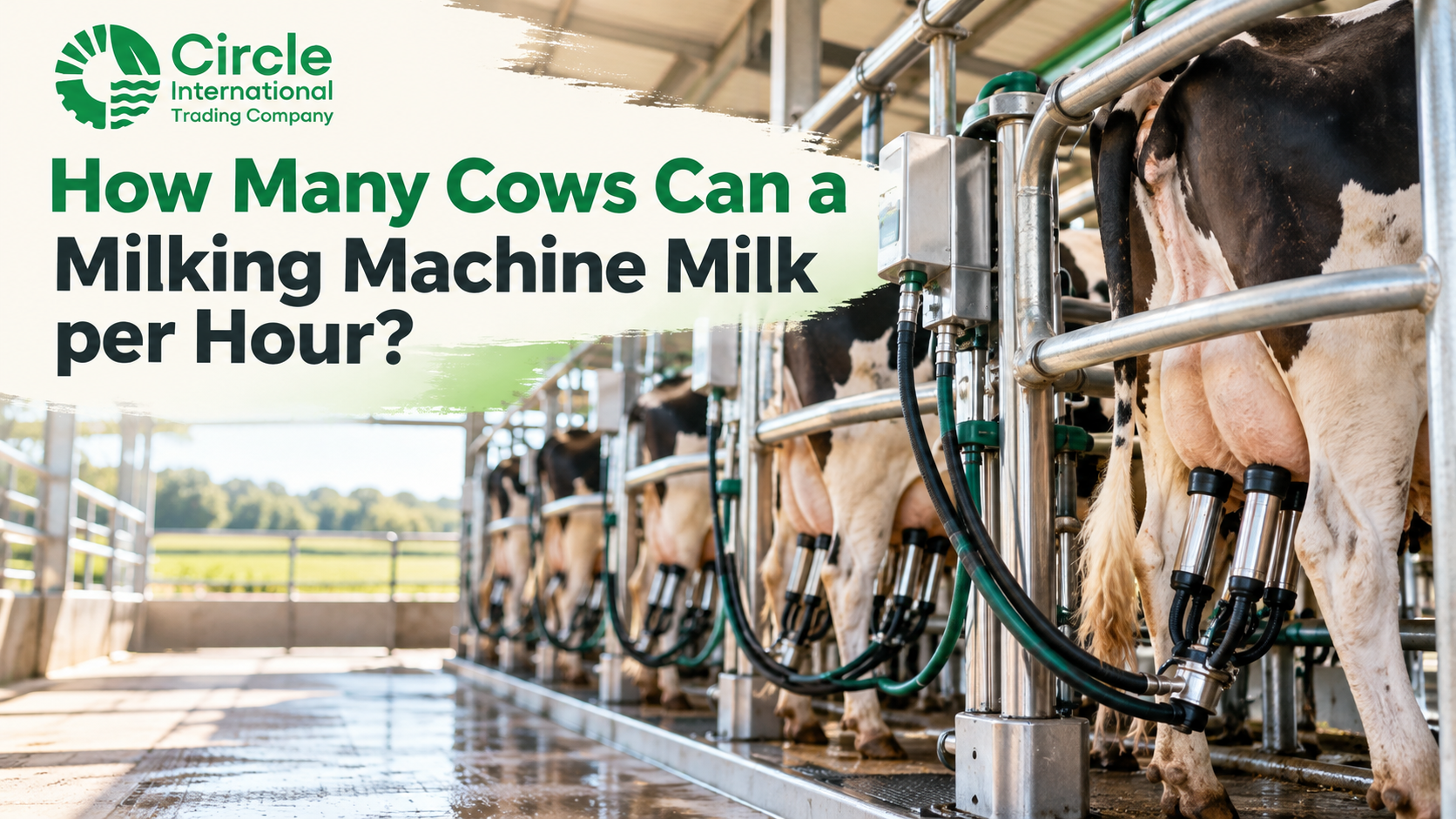
A milking machine works by using a controlled vacuum to gently draw milk from a cow’s or buffalo’s teat into a clean collection bucket. Its vacuum pump creates the suction, while the pulsator alternates pressure around the teat liner to maintain a natural milking rhythm. At Circle International, we offer mobile milking machines in Pakistan designed with vacuum pumps, teat cups, pulsators and collection buckets to help dairy farmers reduce manual effort and improve milking efficiency.
Unlike hand milking, the operator does not need to squeeze the teat manually. Instead, the machine creates a pressure difference, allowing milk to flow from the udder through the teat cups and into the collection bucket. The pulsator regularly changes the pressure around the teat to help maintain animal comfort and support proper milk flow. fao.org
Circle International provides mobile milking machine solutions for dairy farmers in Pakistan, including machines designed for cows and buffaloes. Understanding how a milking machine works can help you choose the correct model, operate it safely and maintain it properly.
What Is a Milking Machine?
A milking machine is dairy equipment that removes milk from cows, buffaloes, goats or other compatible dairy animals using vacuum pressure.
A typical machine includes:
- Vacuum pump
- Vacuum regulator
- Pulsator
- Teat cups
- Rubber liners
- Claw piece
- Milk hoses
- Pulsation hoses
- Milk collection bucket
- Motor and trolley frame
The exact design may differ between a single bucket, double bucket, single-cluster and double-cluster machine.
Main Parts of a Milking Machine
1. Vacuum Pump
The vacuum pump removes air from the milking system and creates partial vacuum pressure. This vacuum helps draw milk from the teat and also keeps the teat cups attached during milking.
The pump must provide stable and suitable vacuum pressure. Excessive or unstable vacuum can cause discomfort and may affect teat condition.
2. Pulsator
The pulsator is responsible for changing the pressure around the teat liner. It alternates between vacuum and normal air pressure, allowing the liner to open and close rhythmically.
This alternating action is important because a constant vacuum around the teat would not provide the necessary resting and massage phase. AHDB
3. Teat Cups
Teat cups are attached to each teat. Each cup normally contains:
- An outer shell
- A flexible rubber or silicone liner
- A milk passage
- A pulsation chamber
The inside of the liner is connected to the milk vacuum, while the space between the liner and shell is controlled by the pulsator.
4. Rubber Liners
The liner is the soft inner part that touches the animal’s teat. During the milking phase, it opens and allows milk to flow. During the rest phase, it closes gently around the teat.
Liners must be the correct size and should be replaced when they become cracked, hard, stretched or damaged.
5. Claw Piece
The claw piece collects milk from the individual teat cups and combines it into one milk flow. It then directs the milk through the long milk hose toward the collection bucket or milk line.
6. Milk Hose
The milk hose carries milk from the claw piece to the collection container. It should be made from suitable food-contact material and must remain clean, flexible and free from cracks.
7. Collection Bucket
The bucket receives and stores the milk during the milking process. A single bucket machine has one collection bucket, while a double bucket machine has two.
Many portable machines use stainless-steel buckets because they are durable and easier to clean.
How Does a Milking Machine Work Step by Step?
Step 1: Prepare the Animal
Before attaching the machine, clean the udder and teats. Check for visible dirt, swelling, wounds or any unusual condition.
The animal should remain calm because stress can affect milk let-down and make the milking process less effective.
Step 2: Start the Vacuum Pump
The operator switches on the motor and vacuum pump. The pump removes air from the system and creates the required vacuum.
The vacuum regulator helps keep the pressure within the machine’s operating range.
Step 3: Attach the Teat Cups
Once the vacuum is stable, the operator attaches the teat cups to the animal’s teats.
The teat cups should attach smoothly without excessive air leakage. If a cup repeatedly falls off, the operator should check the liner, hose, teat position and vacuum system.
Step 4: Pulsation Begins
The pulsator starts alternating the pressure in the pulsation chambers. When the chamber is under vacuum, the liner opens and milk can flow. When normal air enters the chamber, the liner closes and provides a resting or massage phase.
This repeated opening and closing is what makes machine milking different from simply applying continuous suction. ScienceDirect Topics
Step 5: Milk Flows Through the System
Milk moves from the teat cups into the claw piece. From there, it travels through the milk hose and enters the collection bucket.
The milk should flow smoothly without excessive air, splashing or leakage.
Step 6: Monitor Milk Flow
The operator should monitor the animal and the milk flow during the entire process. Do not leave the machine attached longer than necessary after milk flow has significantly reduced.
The machine should be removed carefully by releasing the vacuum before taking off the teat cups.
Step 7: Finish and Clean
After milking, detach the teat cups safely and apply the farm’s recommended post-milking udder-care routine.
All milk-contact parts should then be rinsed, washed, dried and stored correctly.
How Does Vacuum Create Milk Flow?
A milking machine does not squeeze milk out in exactly the same way as a person’s hand. Instead, it creates a pressure difference at the teat end.
The vacuum inside the liner helps draw milk from the teat canal. The milk then travels through the short milk tube, claw piece and long milk hose before reaching the bucket or milk line.
The vacuum also helps keep the teat cup attached to the teat. However, the vacuum must remain controlled. The correct combination of vacuum, pulsation and liner movement is important for efficient milking and animal comfort.
What Is the Role of Pulsation?
Pulsation is one of the most important parts of a milking machine.
A pulsator switches the pulsation chamber between vacuum and atmospheric air. This causes the liner to open and close repeatedly.
A complete pulsation cycle normally includes:
- Opening phase: The liner opens and milk flows.
- Transition phase: Pressure changes inside the pulsation chamber.
- Closing phase: The liner closes around the teat.
- Rest phase: The teat receives relief before the next cycle.
The pulsation system helps prevent continuous vacuum exposure and supports a more comfortable milking routine.
How Does a Single Bucket Milking Machine Work?
A single bucket milking machine uses one milk collection bucket connected to the vacuum pump, pulsator and milking cluster.
It may have:
- One cluster for milking one animal at a time, or
- Two clusters for milking two animals simultaneously, depending on the model
Single bucket machines are generally suitable for small dairy farms because they are compact, portable and easier to clean.
Read our comparison guide: Single Bucket vs Double Bucket Milking Machine.
How Does a Double Bucket Milking Machine Work?
A double bucket milking machine works on the same vacuum and pulsation principle but uses two milk collection buckets.
The additional bucket capacity can be useful for medium-sized and larger dairy farms. It may reduce the need to empty containers during the milking routine and can support a larger working setup.
However, the actual speed depends on the number of clusters, pump capacity, hose design, animal response and operator handling.
How Does a Mobile Milking Machine Work?
A mobile milking machine contains the vacuum system and milk collection bucket on a wheeled frame. The operator can move the machine near the animal instead of bringing animals to a fixed milking parlour.
Mobile machines are useful when:
- Animals are kept in different sheds
- The farm has limited construction space
- Farmers need a flexible setup
- The machine is used for cows and buffaloes
- A portable dairy solution is preferred
You can explore Circle International’s mobile milking machines in Pakistan for available options.
Can a Milking Machine Be Used for Buffaloes?
Yes, suitable milking machines can be used for buffaloes. However, the machine should have compatible teat cups, liners and vacuum settings.
When choosing a buffalo milking machine, check:
- Teat cup size
- Liner material
- Vacuum stability
- Pulsation performance
- Milk bucket material
- Availability of spare parts
- Supplier support and operating guidance
For more information, read our guide on buffalo milking machines in Pakistan.
Does a Milking Machine Hurt the Animal?
A properly selected and correctly operated milking machine should not hurt the animal. The main risks usually come from incorrect vacuum pressure, damaged liners, poor attachment, blocked hoses, irregular pulsation or leaving the machine attached for too long.
To support animal comfort:
- Use the correct liner size.
- Check vacuum pressure regularly.
- Keep teat cups clean.
- Replace damaged liners.
- Avoid unnecessary air leakage.
- Monitor the animal during milking.
- Remove the machine when milk flow is finished.
- Follow proper udder hygiene.
If an animal shows pain, restlessness, swelling or abnormal milk, stop the process and consult a qualified veterinarian or dairy professional.
How Long Does Machine Milking Take?
Milking time depends on the animal, milk yield, machine type, cluster configuration, pump performance and operator experience.
A machine may reduce manual labour and improve consistency, but it does not mean every animal will be milked in exactly the same amount of time. Buffaloes, cows and other animals can have different milk flow patterns.
The best approach is to choose a machine according to the herd size and daily workload rather than relying only on advertised speed.
How to Clean a Milking Machine
Cleaning is essential because milk residue can support bacterial growth and affect milk quality.
After every milking session:
- Rinse the bucket, liners, teat cups and hoses.
- Wash milk-contact parts with a suitable cleaning solution.
- Flush the milk hose thoroughly.
- Clean the claw piece and connectors.
- Allow all parts to dry properly.
- Inspect the liners for cracks or damage.
- Store the machine in a clean and dry location.
Do not store the machine while milk or water remains trapped inside the hoses.
Common Milking Machine Problems
Teat Cups Keep Falling Off
Possible causes include:
- Air leakage
- Damaged liner
- Incorrect attachment
- Weak vacuum
- Loose hose connection
Milk Flow Is Slow
Possible causes include:
- Blocked milk hose
- Poor vacuum performance
- Incorrect liner size
- Stressed animal
- Full or restricted collection bucket
Machine Makes Too Much Noise
Possible causes include:
- Pump wear
- Loose fittings
- Poor lubrication, where applicable
- Blocked air filter
- Motor or belt problems
Milk Contains Too Much Air
Possible causes include:
- Air leaks around teat cups
- Incorrect claw adjustment
- Damaged hoses
- Poor attachment technique
If the issue continues, stop using the machine and contact the supplier or a qualified technician.
What Should You Check Before Buying a Milking Machine?
Before buying a milking machine in Pakistan, check:
Vacuum System
The pump should provide stable and controlled vacuum performance.
Pulsator
The pulsator should work consistently and be easy to inspect or replace.
Teat Cups and Liners
Confirm that the cups and liners are suitable for your cows or buffaloes.
Milk Bucket
Choose a durable, easy-to-clean and food-safe collection bucket.
Spare Parts
Ask whether liners, hoses, pulsators and other parts are available locally.
Warranty
Check the warranty for the motor, vacuum pump and other important components.
Farm Size
Choose a single bucket machine for a smaller workload and consider a double bucket system for a larger herd.
For more information about cost factors, read Milking Machine Price in Pakistan.
Final Verdict
A milking machine works by combining controlled vacuum, rhythmic pulsation and a milk collection system. The vacuum draws milk from the teat, the pulsator opens and closes the liner, the claw piece combines the milk flow and the hose carries the milk into the collection bucket.
For small farms, a single bucket mobile milking machine can be a practical and affordable option. For larger dairy operations, a double bucket or multi-cluster system may provide greater capacity.
The most important factors are correct vacuum control, suitable teat cups, proper cleaning, regular maintenance and careful operation. Circle International offers mobile milking machine options for Pakistani dairy farmers who want to reduce manual effort and improve their daily milking process.
Contact circle international today!
Frequently Asked Questions
How does a milking machine remove milk?
It uses controlled vacuum pressure to draw milk from the teat into the teat liner, claw piece, milk hose and collection bucket.
What does the pulsator do?
The pulsator alternates vacuum and atmospheric pressure around the liner, causing it to open and close during the milking cycle.
Can one milking machine be used for cows and buffaloes?
Yes, if the machine has suitable teat cups, liners and operating settings for both animals.
Is a milking machine better than hand milking?
A milking machine can reduce manual labour and provide a more consistent process, but it must be operated, cleaned and maintained correctly.
How often should a milking machine be cleaned?
Milk-contact parts should be cleaned after every milking session.
Does a double bucket machine work differently from a single bucket machine?
Both use the same vacuum and pulsation principle. The main difference is the number of collection buckets and the overall capacity of the setup.
What happens if the vacuum pressure is too high?
Excessive vacuum may cause animal discomfort and can negatively affect teat condition. Always use the manufacturer’s recommended operating settings.