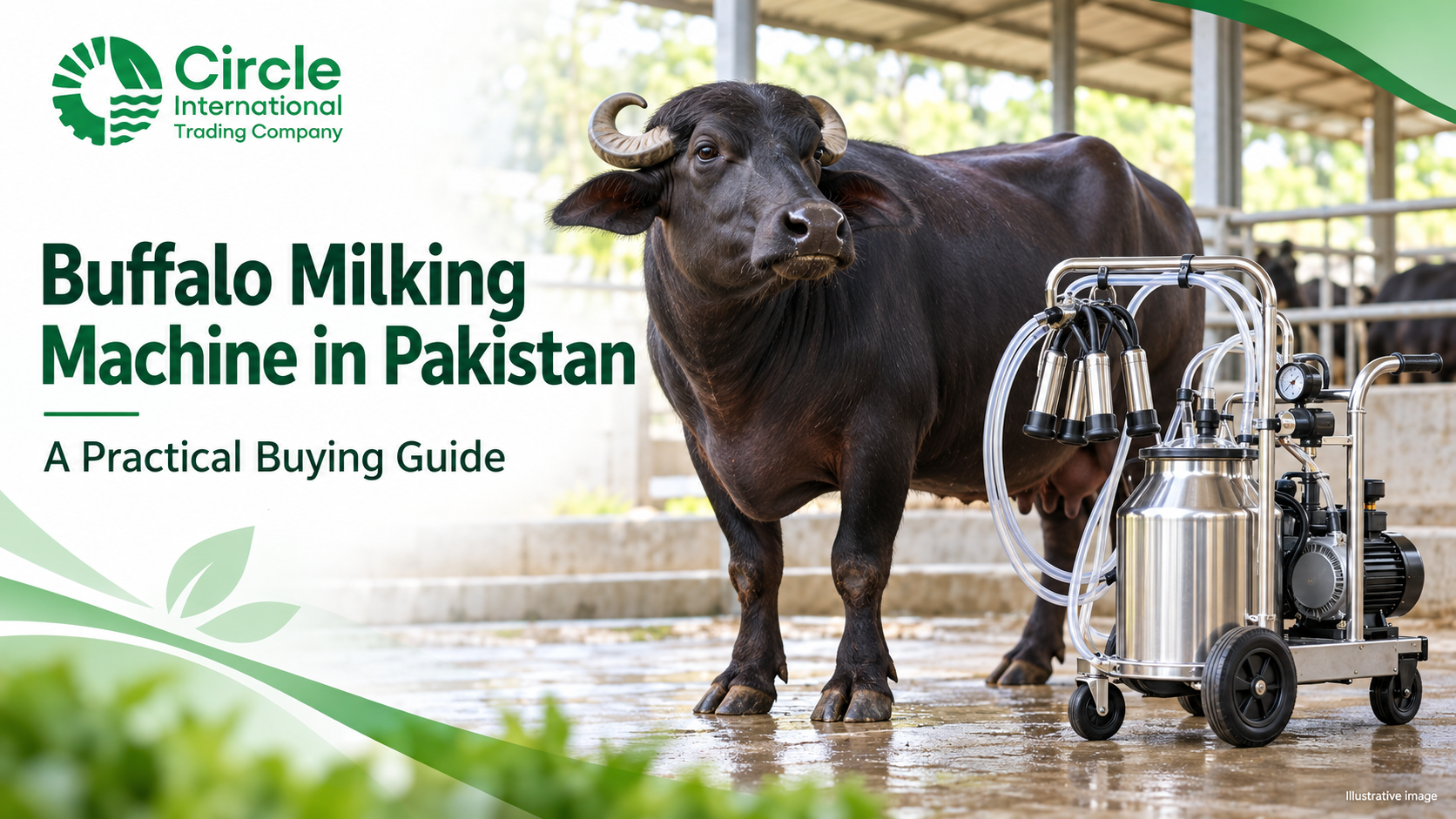
An electric milking machine in Pakistan uses an electric motor to drive the vacuum pump used for mechanical milking. Circle International lists electric single bucket machines with single and double cluster configurations. Choose between them according to your animals, available milking time, operator workload and power supply—not simply the size of the bucket.
Before ordering, confirm the complete supplied specification, animal compatibility and support arrangements. Explore our mobile milking machines in Pakistan to compare the available options, then use this guide to prepare your questions for the supplier.
How Does an Electric Milking Machine Work?
In a conventional electric milking system, the motor drives a vacuum pump. The vacuum helps milk move through the teat-cup assembly and milk tubing into a collection container. A pulsator controls the opening and closing of the teat-cup liners during the milking cycle.
FAO’s guide to milking machines and equipment explains these basic components and their functions. For the buyer, the important point is that the motor is only one part of the system: the pump, pulsator, liners and collection arrangement must work together appropriately.
Ask the supplier to explain the components on the exact machine being offered. Confirm what the operator needs to monitor and which settings should only be adjusted with technical guidance.
Electric Does Not Mean Fully Automatic
An electric motor powers the equipment; it does not automatically prepare the animal, attach the cluster or clean the machine. Features such as automatic cluster removal or automated washing must be confirmed separately for the selected model.
When comparing offers, ask what “automatic” actually means. A simple demonstration of the complete routine can be more informative than a product label.
Electric Milking Machine Options at Circle International
Two listed electric configurations provide a starting point for comparison:
| Listed option | Configuration | Power information shown in the listing |
|---|---|---|
| Single Bucket Single Cluster Milking Machine | One collection bucket and one cluster | 220 V supply and 0.55 kW motor |
| Single Bucket Double Cluster Milking Machine | One collection bucket and two clusters | 220 V supply and 0.55 kW motor |
These figures apply to the named listings, not to every machine in our range. Confirm the supplied unit’s specification and motor nameplate before purchase. Current availability, included accessories and animal suitability should also be checked when requesting a quotation.
For other configurations, browse the category rather than assuming that different models share the same electrical requirements.
Single or Double Cluster: Which Should You Choose?
Single Cluster for Individual Milking
A single cluster setup is worth evaluating when your operator can milk animals individually within the available session. Assess the whole routine, including preparation, bucket emptying and cleanup, rather than looking only at advertised milking time.
Double Cluster for a Busier Routine
A double cluster setup deserves consideration when sequential milking is limiting your schedule. Ask the supplier to demonstrate simultaneous operation and explain how the operator manages two animals and the shared collection bucket.
A second cluster does not guarantee that the complete session will take half as long. Animal movement, preparation and collection tasks still need to be managed.
For a more detailed workload comparison, see our guide to milking machines for small farms in Pakistan.
What Power Requirements Should You Check?
Before buying an electric milking machine, give the supplier details of your farm’s electricity supply and usual milking location. Ask for the following information in writing:
- Required voltage, frequency and phase.
- Rated electrical input and running current.
- Starting requirements for the motor.
- Connection and protection requirements specified for the machine.
- Guidance for shutdown and restart after a power interruption.
Have a qualified electrician assess the connection against the manufacturer’s instructions. Do not choose a cable, protective device or backup supply solely from a general online guide.
Can It Run on a Generator, UPS or Solar System?
Potential compatibility must be assessed for the actual machine and backup system. Share the machine’s electrical data with the equipment supplier and your electrician or power-system installer.
Ask them to confirm motor-starting capability as well as continuous running capacity. Also consider other equipment connected to the same supply. The presence of a UPS, generator or solar inverter does not by itself establish compatibility.
How Much Electricity Will the Machine Use?
For a simple estimate, multiply the machine’s actual average electrical input in kilowatts by the number of hours it runs. This gives energy use in kilowatt-hours, commonly called electricity units.
For example, a hypothetical machine drawing an average of 0.8 kW for two hours would use about 1.6 kWh. Multiply that figure by your applicable electricity rate to estimate the energy charge. This example is not a consumption claim for either listed product.
A motor’s advertised kW rating may refer to output rather than total electrical input. Ask for consumption information or use suitable measured data instead of treating the listing’s motor rating as an exact electricity-bill figure.
Is the Electric Machine Suitable for Cows and Buffaloes?
Confirm suitability for your animal type before paying. Tell the supplier whether the herd includes cows, buffaloes or both, and ask which liners, cluster components and operating guidance are supplied.
An electrical specification describes the power requirement; it does not establish animal compatibility. Request a relevant demonstration where possible and make sure the person who will operate the machine receives appropriate training.
Buffalo farmers can also read our buffalo milking machine buying guide for the preparation and selection questions to discuss with the technical team.
Electric Milking Machine Price in Pakistan
Request a current quotation for the complete configuration you need. Compare like-for-like packages, including the bucket, clusters, accessories and any delivery, setup or training charges.
Ask about the cost and availability of replacement liners, hoses, seals and servicing. These expenses matter alongside the purchase price, particularly when the machine will be used daily.
Our Milking Machine Price in Pakistan guide covers the broader pricing discussion. Use it to prepare your budget, then confirm the final offer and written warranty terms for your selected unit.
Cleaning, Maintenance and Operator Training
FAO’s milking guidance stresses clean, properly maintained equipment and operation according to manufacturer instructions. An electric motor does not remove the need for a complete cleaning routine.
Ask for model-specific instructions explaining which parts to clean, how to clean them and which products are approved. Request a maintenance schedule and a list of components needing regular inspection or replacement.
Before accepting delivery, have the daily operator demonstrate the routine back to the trainer. Make sure they know the service contact and what to do when the machine behaves unexpectedly. Do not experiment with operating settings to compensate for a fault.
A Checklist Before You Place an Order
- Confirm the exact machine and included components.
- Obtain written confirmation of animal suitability and electrical requirements.
- Ask for a demonstration covering operation and cleaning.
- Confirm spare-parts availability and service arrangements.
- Review the complete quotation and warranty exclusions.
Share your location, animal type, number of animals currently being milked and available session time when enquiring. A recommendation based on these details is more useful than choosing equipment by motor power alone.
Choose an Electric Setup That Fits Your Farm
The right electric milking machine in Pakistan should match your animals, daily routine and available power supply. Compare configurations, confirm electrical compatibility and learn the cleaning procedure before committing.
Browse Circle International’s available machines and request a recommendation based on your farm’s actual requirements.
How do I get a current quotation?
Contact Circle International with your farm details and shortlisted configuration. Request the current specification, full package price and support terms before ordering.
Frequently Asked Questions
Does every electric milking machine use 220 V?
No. The two named Circle International listings show 220 V, but other machines may have different requirements. Check the supplied unit’s specification and nameplate.
Is an electric machine also hand-operated?
Not unless that specific model has a confirmed manual operating arrangement. A portable trolley or bucket does not mean the vacuum pump can be powered by hand.
Can a small farm use an electric milking machine?
Yes, when its configuration, animal compatibility and power requirements fit the farm. Compare the complete workload and running costs before deciding.
Will it automatically increase milk production?
Buying a machine does not guarantee increased production. Assess it for its fit with your milking routine and operator workload, rather than relying on an unsupported yield promise.